Welcome to the 2023 Advent Calendar. It’s day 1, and we will cover one of my favourite things in our imperfect world: trees!
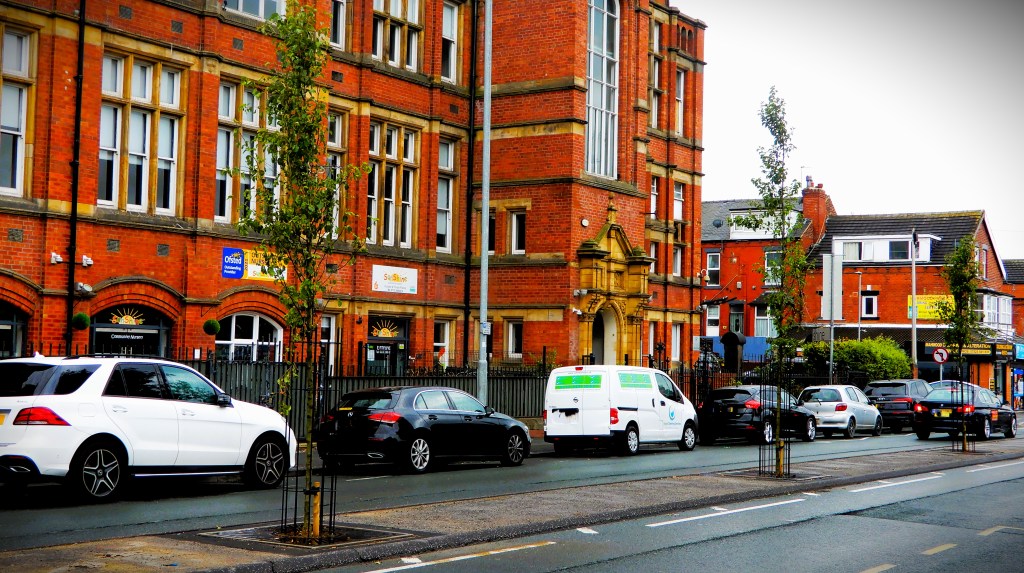
Recently, Harehills Road has become a host to new trees. They’ve been given a home on the central reservation that started going down the middle of Harehills Road a few years ago.
There are some citations at the end of the article if you want to find out more about the benefits of trees in urban environments.
Update 15/12/2023: This story has been updated to reflect the efforts of Katie, and Karen from Back to Front who have worked tirelessly for years to get trees on to our streets. I can only apologise for missing their vital and tireless work to bring more trees to Harehills.
Harehills Road, from frustrating eyesore to horticultural potential
For a long time, it has been a strip of tarmac and concrete kerbs; I’ve heard many theories about how it came to be and how it went unfinished, some people know, some people don’t – but it doesn’t matter. I appreciate many reasons it wasn’t liked or worried people – as a pedestrian, it made crossing Harehills Road feel safer, as it’s a long road with proper crossings quite far apart.
Years of planning culminating in positive action
I first heard about the current project to green up Harehills Lane back in June 2021, it came up in minutes for a Greener Gipton and Harehills Campaign. In it, it was noted as an additional opportunity that meetings for a Harehills Road project which involved multiple council groups, and plans were on going, including ensuring soil would be suitable for small trees, and the work needed to be done to the central reservation to prepare for the trees.
You can read the minutes for yourself, here, but here’s an excerpt to show you just how much work has gone into this project:
A meeting was held between JW, GL and LCC Parks & Countryside colleagues, where a discussion was held regarding the possibility of tree planting within the central reservation. It was tentatively agreed, pending investigative works (such as ground radar surveys to determine soil type and underground utility services) that trees could be planted without the expensive root planting systems that are usually required. Parks colleagues suggested that there would be enough soil within the reservation to accommodate smaller trees that would be for a well-being and aesthetic uplift for the road, rather than large trees that would also have a strong air quality benefit.
Greener Gipton and Harehills Campaign on yourvoice.leeds.gov.uk
Back to Front Leading the Way
Katie and Karen who represent Back to Front, have been actively pursuing the greening up of Harehills, including on Harehills Road where they played a major part in getting any trees at all on the road.
Back to Front is an organisation dedicated to encouraging the growing of edible fruit and vegetables in Harehills. They’ve recently been very active in supporting and encouraging the community garden at the Junior Sports Hub.
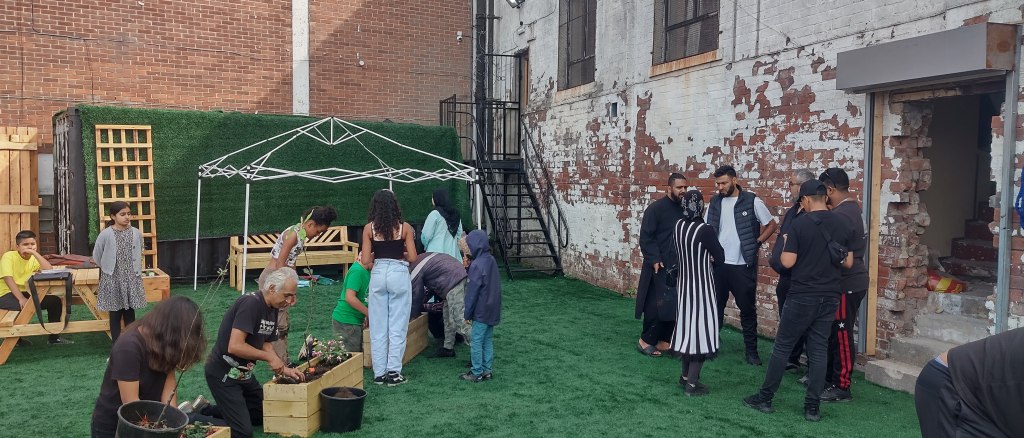
They began their campaign years ago, and has involved countless emails, walk arounds and meetings since the traffic accident reduction scheme first started being discussed in 2016. They faced down resistance, with some officials feeling plastic plants would be more suitable, or for the community to handle the watering and care of the trees themselves, (which obviously wouldn’t be appropriate as they are in the middle of a very busy road, and water would have to be carted back and forth from people’s homes).
I think the the trees that have been planted will eventually look lovely, however, they are small, and Karen originally envisioned larger air cleaning trees to breath some much needed fresh air into our community, that would have been planted staggered on the pavements, rather then in the middle of the traffic islands.
I’m hoping that once these trees thrive, and we can all appreciate extra greenery, that the trees on pavements at the side of the road could still be explored in the future.
Why are trees important?
Adding trees to dense urban environments can bring a plethora of benefits. Not only do they provide aesthetic beauty to a concrete jungle, but they also improve air quality by producing oxygen and reducing harmful pollutants like carbon dioxide and nitrogen oxide. Additionally, they provide habitats for wildlife and contribute to overall biodiversity. Finally, trees can also reduce noise pollution by acting as a natural sound barrier. Overall, adding trees to urban environments can greatly enhance the quality of life for both humans and the environment.
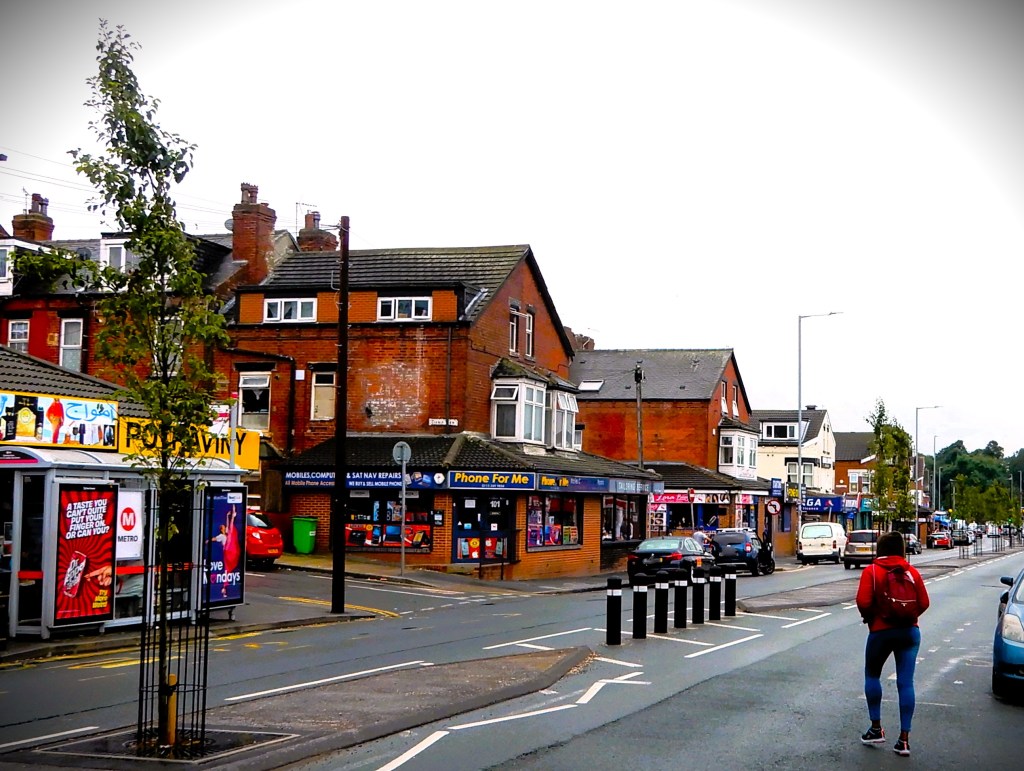
Harehills has quite a lot of trees. You can see in the photos below that many streets are fortunate to have trees built in. While you can hear people talking about Harehills being red brick and tarmac through and through, we’ve always had an undercurrent of trees, whether it’s the presence of two parks (for my purposes today, I am claiming Harehills Park for Harehills – I would have claimed Beckett Street cemetery too, it’s just on the doorstep, but I don’t want to push it), or its trees in people’s small gardens, or the street trees mentioned above.
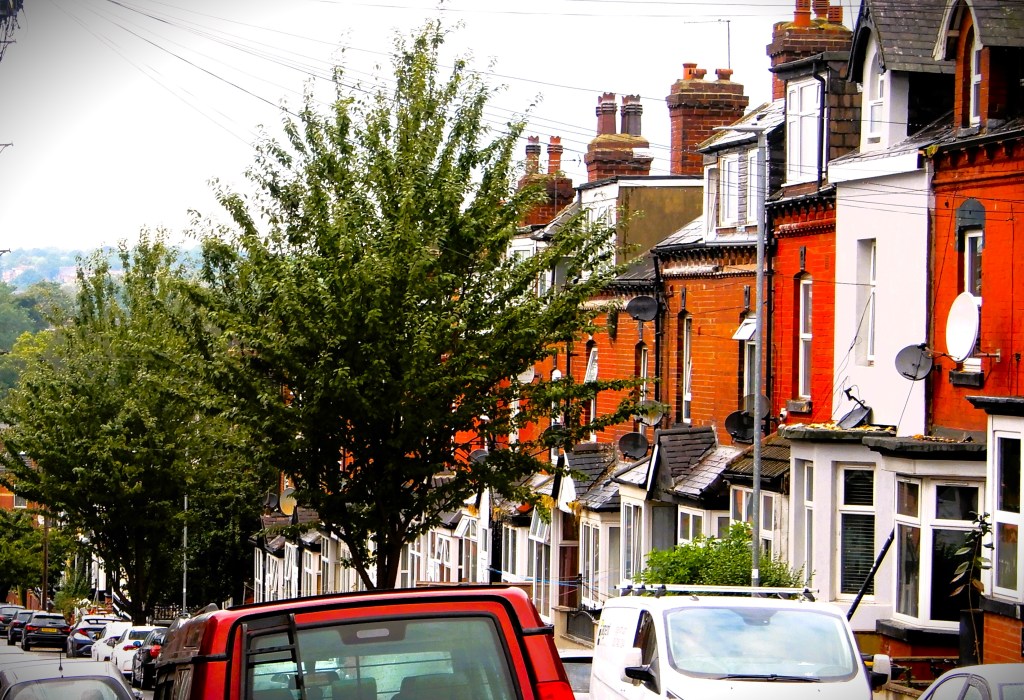
It won’t be the only mention of trees this advent calendar, but I wanted to start with new life and promise, and that’s what we’ve got growing along Harehills Road.

This won’t be the last we hear of trees in this Advent Calendar
Important sites and articles on the benefits of trees in urban environments
Wiser people than myself have tackled this subject, so here are some citations if you want to find out more:
- “The Benefits and Limits of Urban Tree Planting for Environmental and Human Health” by Nowak et al. (2018). This study reviews the scientific literature on the benefits of urban trees, including their ability to reduce air pollution, improve air quality, mitigate the urban heat island effect, reduce stormwater runoff, and provide habitat for wildlife. https://www.frontiersin.org/articles/10.3389/fevo.2021.603757
- “Trees in our cities: 10 reasons we need to plant more” by Trees for Cities (2022). This article lists 10 of the many benefits of trees in urban areas, including their ability to improve air quality, reduce noise pollution, provide shade, and increase property values. https://treesforcities.org/stories/trees-in-our-cities-10-reasons-we-need-to-plant-more
- “The Importance of Urban Trees” by the World Forest Organisation (2022). This article discusses the role of trees in urban areas, including their ability to mitigate climate change, improve air quality, and provide a range of other benefits for human health and well-being. https://www.wordforest.org/2022/03/26/the-importance-of-urban-trees/
- “The Benefits of Trees for Livable and Sustainable Communities” by the New Phytologist Foundation (2019). This paper discusses the many benefits of trees for urban communities, including their ability to reduce air pollution, improve air quality, mitigate the urban heat island effect, and provide a range of other environmental and social benefits. https://nph.onlinelibrary.wiley.com/doi/full/10.1002/ppp3.39
- “Urban Landscapes & the Importance of Trees” by Valley Provincial (2022). This article discusses the importance of trees in urban landscapes, including their ability to improve air quality, reduce stormwater runoff, and provide shade https://www.valleyprovincial.com/news/trees-in-urban-landscapes
 Harehills ❤️ Love
Leave a comment